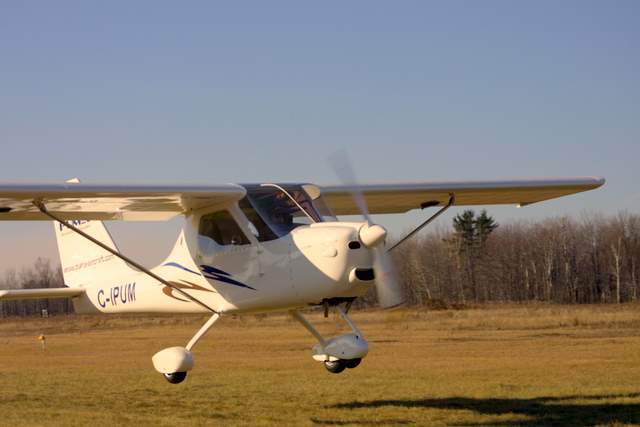
| This is what has lead to the success of the PUMA. The aircraft, designed in Italy by Antonio Bortolanza, has undergone a number of design transitions since it was first introduced in 1985. Humberto Dramisino has been involved with the manufacturer of the PUMA from a very early age. He first started working in the factory when he was only 15 years of age, "working just for the pleasure of working on airplanes." The factory decided to redesign the craft, with the idea of moving into the North American market. The redesign did not change the materials and construction techniques, that have proven themselves for over 20 years. It involved more the appearance of the craft. In 2006 Otreb Technologies became the North American distributor for the PUMA. The first aircraft arrived in November 2006 and was finished and flown in May 2007. When you hear the name PUMA, you immediately think of the sleek, powerful majestic cat, which roams the North American wilds. Italians have long been famous for their flare for design. When you look at the PUMA aircraft you can see how the "Italian" designer has introduced the same qualities of the wild cat into his aircraft. All of the manufacturing of the PUMA, preformed parts, composite parts, drilling, etc. is done in Italy. The kit is then crated and shipped to Canada. On arrival Otreb Technologies then inventories the craft, and prepares it for delivery to the customer. Otreb Technologies receives the craft minus engine, exhaust and instruments. These are all supplied by Otreb Technologies from North American suppliers. Otreb also produces a number of items for the PUMA, such as trim fairings for the rudder cables, instrument panels and wiring harnesses. The PUMA is also built specifically for the North American market, which has considerably higher weights and speeds than are allowed in Europe. The PUMA is offered in kit form which will take about 150 hours to complete, or as a ready to fly aircraft as a Basic or Advanced Ultralight in Canada. Otreb Technologies is also preparing to enter the U.S. lightsport aircraft market. The PUMA already meets a number of very strict European standards, so most of the work to meet LSA is paperwork. |